Showing posts with label Marathi. Show all posts

Friday, July 17, 2015

The Kannada History of Maharashtra

Dr. M Chidananda Murthy is a researcher, historian and scholar par excellence. Even at age 84, he has great grip of his research and presents his papers with amazing clarity. He has published a long list of papers and books throughout his life, and lots of debates happen on his findings. His strong support to Hindutva in particular makes his opponents very uncomfortable. His research on Tipu Sultan in particular, exposed the other side of Tipu which self-proclaimed seculars had a very hard time digesting.

I have met this extremely gentle human many times. I am thoroughly impressed with his ability to research into Indian history in a precise manner.

Today, I came across his column. "Earlier Karnataka was three times the size of today's Karnataka". If you can't read the font properly in the image below, use this link to read the Vijayavani epaper.


The focus of this article, with lots of historical proofs is to inform that during ancient and medieval periods, Kannada speaking areas were from Kaveri delta in today's central Tamil Nadu till Godavari in Nashik area of Maharashtra. As with everything in history, there would be for's and against's to such claims. But I thought it would be useful to give a quick translation so that those interested further in research, can pursue the topic.

Some snippets from his article, which extensively focuses on today's Maharashtra, and its Kannada past in many areas. Here are some districts of Maharashtra for which the Kannada influence has been researched and presented by Dr. Murthy in this article.
Districts of Maharashtra covered in this article. Pic: NIC
Sri Vijaya's Kavirajamarga from 850 CE, has given 8th and 9th century CE description that Karnataka, or the land of Kannada speaking people, extended from Kaveri to Godavari.

Sham. Bha. Joshi, Raja Purohit, and Alur Venkata Rao have done extensive research supporting the geographic claims of Sri Vijaya.

Chidananda Murthy has written "Bhashika Brihat Karnataka - From Nilagiri to Nashik". 

Deshabhakta Veer Savarkar is from Nashik district. His father's place is Bhagur. His mother's place is Kothur. Notice "Ur" or "Uru" in both places, that are distinct Kannada names. Savarkar's family dog was named "Kariya" (Darkie or Blackie in Kannada). Savarkar's father used to call Vinayak as "Balam Bhatta" during younger days. That name is very popular in Karnataka.

Maharashtra's Mahanubhava pantha (sect) was started during 13th century by Shri Chakradhar swami. Chakradhara's guru was Gundama Bhatta. Gundama is a medieval Kannada name.

Nashik district has a distinct tribe called "Hatkar Kaanadi" people. Maybe they are named that way because they lived in Huts and spoke Kannada (Kaanadi). Per Chidananda Murthy, they are the native people of Nashik from ancient times. Even today that tribe speaks sentences like:
  • Ninge magadir yaanayudu? (How many children do you have?)
  • Nange ain magadir, eddu magardir aaidu (I have 5 sons and 2 daughters). 
  • Nange maneg hogadu usiraat (it is time for me to go home).
Here, magadir, magaLdir, usiraat (avasara) are all old Kannada words. Similarly Hatkar Kaanadi people use kundal (hair), ba (mother) and many other words showing that North Maharashtra's Nashik area had Kannada population 1000 years ago.


Next, Murthy tells about Mumbai. A famous place today in Mumbai, Malabar hills is per him named after "male" people. In Kannada Male (maley) means hill. British would have used this for the hilly people (ghaati) who lived there. In 1818 (or 1819), when a new British person Mount Stuart Elphinstone was appointed as the Governor of Mumbai, Malabar hills people submitted a letter in Kannada welcoming him. British used the word "Canarese" or "Kanarese" to describe Kannada speakers. That's why they named Uttara Kannada and Dakshina Kannada districts as North Canara and South Canara districts.

Some evidences suggest that Mumbai's original inhabitants, the KoLi people, spoke Kannada centuries ago. BA Salettur has opined that long ago, today's Mumbai area was inhabited by Kannada speaking people.

Talking further about Mumbai, the marriage treaty of Charles II of England and Catherine of Braganza, daughter of King John IV of Portugal, placed Bombay in possession of the British Empire in the 1660s, as part of dowry of Catherine to Charles. Dr. Murthy says that in 1670, when the British brought in new law in English, they translated it into Portuguese and Canarese (Kananda) to help the inhabitants or Bombay. Goa during those times also had many Kannada speakers. In 1737, a British writer has described Kannada as a language of "lower class" people of Mumbai.

Dr. Murthy presents two maps - One from 1909 (English and Kannada) and one from 1940 (Marathi text book), that indicate the contemporary Karnataka of those times. The 1940 text book map published by British government, named "Arvachin Karnataka" (Modern Karnataka) has Belagavi/Belagav in it. The 1909 clearly is much larger than what Karnataka is today. It includes today's Goa, Belagavi, Kolhapur and even Solapur in Karnataka.
Post 1956 Karnataka - Map: Wiki
Of course, the districts were merged into administration of various neighbouring kings or provinces during British era. You can compare that side by side with Karnataka since 1956 States Reorganization done by Jawaharlal Nehru's government to get an idea of districts within today's Karnataka and the ones which are with other states today.

Dr. Murthy continues district-wise in Maharashtra. He says that betel leaf growers of Nashik are "Tigula" people, the same ones found in Karnataka speaking Kannada or Tamil. South Maharashtra's districts like Solapur, Kolhapur, Nanded, Sangli etc. have most of their ancient shila shasana (inscriptions) in Kannada.

Shri Siddheshwar Temple, Solapur. Pic - Wiki
Solapur's village deity (grama devata) is Shri Siddheshwar. His name was Siddha Rama, and he was a vachana writer 800 years ago. His father was Muddu Gowda. They are from Moradi village of Solarpur. Moradi or Mordi in Kannada means small hill. Vachanas are Kannada literature of Lingayat or Veerashaiva community. So the Kannada origin of Solapur goes back centuries or even millenium. 

In Nanded, common people call laying foundation for a new house as "Kesaru Kalliku". (In Kannada, Kesaru = wet mud, Kallikku = put stone).

Solapur district has a very famous temple for Vithoba or Vitthala in Pandharpur. Marathi scholar RB Shere clearly attributes Kannada origin to Vithoba. Sant Dnyaneshwar in one of his Marathi abhangaha screams - "O Vithala.. You are Kaanadi (Kannadiga).. Hence you are not hearing my pleas". You can read more on Sant Dnyaneshwar, Marathi and Kannada in my earlier blog here. In the famous Pandharpur temple, the last song sung for Lord Vithoba after all puja is in Kannada - to put him to sleep.

Khandoba or Mailara. Pic - Wiki
Jejuri near Pune has the famous Khandoba temple. Khandoba is a Marathi name for Mailara, a very famous name for Shiva in Kannada. If you travel in North Karnataka, especially Hoovina Hadagali area, millions of people worship Shiva in the form of Mailara or Mailara Linga, with almost exactly same description as Khandoba. In Khandoba's major festivities, people near Pune even today shout "El Koti Ughe" or "Khande rayaca Elkot". Here "Elu" and "Kote" are Kannada words meaning Seven forts.

Coming to literature, at the feet of Bahubali's statue in Shravana Belagola in south Karnataka, there's an inscription "Shri Chavundaraje karaveeyale". This from 983 CE, is believed to be the earliest Marathi inscription ever found. But Kannada was existing for centuries before that. Per Dr. Murthy, Marathi existed in the northern regions of Godavari by then. So this inscription was for those people, along with Kannada and Tamil inscriptions for other people visiting this place. Till 12th or 13th century, most of today's Maharashtra below Godavari river were Kannada speaking areas. Badami Chalukyas, Kalyana Chalukyas, Rashtrakutas and many more were ruling over these areas. It was only since the Yadavas of Devagiri about 800 years ago, that Marathi spread widely into today's southern Maharashtra area, replacing Kannada (and some Telugu).

Source: Wiki
The famous Elephanta caves near Mumbai, were built and temples carved by Kannada kings - Chalukyas and Rashtrakutas. Before that, Pulikeshi II had fought Harshavardhana at Narmada banks itself, going far north of Godavari river. And the only battle Harsha lost in his life was this one!

World famous Kailasa natha temple, Ellora. Pic: Wiki
Chalukya emperor Pulikeshi's inscriptions are found in the world famous Ajanta caves today in north Maharashtra. It was during Chalukya and Rashtrakuta empires Ajanta and Ellora became great centers of arts and temples. The world famous Kailasa natha temple in Ellora was built by Kannada king Krishna I before 774 CE using a unique top to bottom rock chiseling technique. It is estimated that about 400,000 tons of rocks were scooped out over hundreds of years to construct this monolithic structure!! The contribution to Ajanta, Ellora, Elephanta, Solapur, Pandharpur, Kolhapur and many other areas of Maharashtra by Kannada kings and people is immense.


Then Dr. Murthy goes into the vocabulary of Marathi language. There are lot of Kannada origin words there. Olage or Oule (inside), Kolu (stick), Tupa (ghee), Mudila (before, first), Oli (letter), Konth (weapon), Balanti (mom or newborn), Aḍakitta (nutcracker), Akka (sister), Anna (brother), Veergal (stone inscription for a martyr), Mechu (small sword like device), Hon (gold)... If you go into depth, you will find that Marathi has a Kannada or Dravidian foundation from ancient and medieval times, but the upper structure is that of Aryan language. Even today's Devanagari script being used as a standard to write Marathi, is an adaptation of recent centuries. For almost a millennium Modi alphabets were used to write Marathi (and occasionally Kannada in Maharashtra).

Per Dr. S Srikanta Shastry, Shatavahana empire that ruled over Maharashtra 1700 years ago, had lot of Kannada (and Telugu) impact.

Then Dr. Murthy finally mentions about Ananthpur and Chittoor in Andhra Pradesh, and Dharmapuri, Salem and Nilgiri areas of Tamil Nadu, to cover the ancient Kannada links.

The purpose of me translating this is not for any political reason. I have good friends from every language. I just found it historically interesting to see the linguistic overlaps. In some cases, I have added a few words of my own, giving additional Wiki or other links to establish better connection. Just like any case involving neighbours in India, you can also find the other side of overlap, if a research is presented properly.

Monday, November 3, 2014

Kannada and Marathi: So Much In Common!

In the November 1st Rajyotsava special massive issue of Kannada Prabha (over 150 pages!), I spotted a fabulous essay by Dr. Karjoo Katkar. The title read: "The literary Ganga, that came crossing the border". Started reading, though I was in a hurry as I had only 5 minutes. But it was so interesting, that I ended up reading fully.

Then decided, I must blog the highlights from Dr. Katkar's research. His email ID is in the picture attached. So here I go.. The main purpose is to inform the people of today's Karnataka and Maharashtra, how overlapping their history has been over the past 1500+ years! This is possibly one of the closest sister language cultural evolution in India.

Origin of Kannada and Karnataka: 
The word Kannada was also used as "Desha suchaka" or geographical historically, in addition to a linguistic denotation. In 850 CE, Kaviraja Marga literary work had this in Halegannda (old Kannada):
Kaveriyinda maa Godavarivaramirda 
Naadada KannadadoL
Bhavisida janapadam vasudhavalaya
vileena vishada vishesham.
Basically the Rashtrakuta Emperor Nripatunga Amoghavarsha is telling here that "Kannada Nadu" extended from Kaveri till Godavari in the 9th century CE.


First occurrence "Karnataka":
Dr. Ketkar shows that in Mahabharata, in the Sabha Parva and Bhishma Parva, the word Karnataka is found. Among Hindu Puranas from 1000s of years ago, Skanda Purana, Vishnu Purana and Padma Purana have the mentions of "Karnataka". In the Sanskrit mega drama Mriccha katika of Shudraka from around 400 CE, there is a sentence "Karnataka kalaha prayogam karomi".  In the Tamil epic Silappatikaram, which is believed to be from 600 CE, "Karunaadar" is used to refer to the people of Karnataka.

Origin of Marathi and Maharashtra:
In Vararuchi's (most likely Katyayana from 3rd century BC) vyakarana (grammar) texts, the word "Maharashtra" is found. Even though the rashtra or nation/state that we know today didn't exist then, it is said that the term was with respect. Per scholars, "Shesham Maharashreevat" and "Maharashtree" were found in some ancient kavyas (prose), denoting the current location of Maharashtra. Some say the same became "Marahatta" and later "Marahti". Per Saroji Babar, the 6th century Pali literary work "Mahavamshi" (most likely this link from Sri Lanka)  refers to Maharashtra as "Maha ratta".

The 13th century Mahanubhava book has "Maharashtra" word. Per Dr. Bhandarkar, "Varhada" or "Varhata" people later became Marathi people. Per Dr. Ketkar's "Marashtra Sanskriticha Itihas", Varhata was the original Maharashtra. The Varhata people migrated from their original place (which I don't know from where), to Krishna Godavari area, culminating in Maharashtra. In the 1190 CE's "LeeLa Charitra", there is a mention of "saari laksha Maharashtra tehi vasavile Ganga teero Triambako vheri". In the 10th century's Dhanapala's "Bhavisya yatta kaha" work, "Verada" word is there which the author suspects as the original word of "Marhada".

In the 779 CE Udyotana Soori's "Kuvayala Malaa Kahaa" work, "Marahatti" word is found. A poet from Kolhapur, Karnapaya wrote "Neminath Purana", which refers to Maharashtra. He's believed to be from 1160 CE per researchers.


The oldest Marathi inscription is actually found in south Karnataka:
The oldest Marathi shila shasana (stone or other inscriptions) was incidentally found in Karnataka's Shravana beLagoLa, very famous for the world's largest monolithic stone statue of Jain Gomateshwara or Bahunbali. Shravana beLagoLa is having more than 2000 years of Jain dharma's history and is one of the world's most holy places for Jains.

At the feet of Bahubali's statue there's an inscription "Shri Chavundaraje karaveeyale" and "Gangaraje suttale karaveeyale". These are believed to be the earliest Marathi inscriptions ever found. Chavundaraya's age is somewhere in the 9th century CE. So Marathi might have existed by then.

Marathi in ancient and medieval Kannada literature:
In the first major poet of Kannada, Adi Kavi Pampa's "Adi Purana" from 941 CE, there is a mention of Maharashtra. In his other work "Bharata", he uses "are hoi" from Drona's mouth praising Arjuna. In another Kannada writer Mahakavi Janna's "Anantantha Purana", there is "Uthi Uthi maagaa baisa jaa tu haLoo" (get up, get up, slowly go and sit in the back) Marathi sentence!

Then Vachana sahitya (literary work) period of the 12th century in Kannada, which flourished into the Lingayat or Veerashaiva movement resulting in the largest single group of people in Karnataka today, also has plenty of Marathi words. For instance, the famous vachana composer Allama Prabhu's one vachana has this.

"Hendatiyillada ganDange
aaru maanisa makkaLu
akhanDita guheshwara haa niraaLu re"

Similarly Sonnalagi Siddarama's or Sonnalagi Siddheshwar's vachanas have Marathi words. Even though he's a Kannadiga, he is worshiped as the "Grama devata" or village deity of Solapur in today's Maharashtra by Marathi people too. There's even a beautiful Siddheshwargad for this saint and poet.

Even Basavanna the founder of Lingayat philosophy and Channa Basavanna's vachanas have a few Marathi words.

Poet Chandratmaja Rudra has written both in Marathi and Kannada. Per Pandit Avalikar, he was a great bridge between Marathi and Kannada literature. His Bhamini's Kannada poems are now found. Similarly Kakhandaki's Mahipati dasa (1640-1705 CE) wrote in both Kannada and Marathi. So far 754 keertanas of Mahipati dasa have been found. Out of them, 45 are in Marathi and rest in Kannada.

Sindhagi in Vijayapura (Bijapur) district of Karnataka had a great Kannada writer called Jakkappaiah.

His "Khanda kavya" is found both Kannada and Marathi.

"Ganesha Amba Vishnu Samba Sura Kadamba vanduni!
Dinesha sadguru paresha pada padma chituni!!
aaga baLikallinda kapivrindamam kuDi!
Raghavendra tenkaDala teerake baralu
pogi kaambuvenendu banda Vibheeshanage Lankadhipatya koTTa"

The above is a story about Vibheeshana in Ramayana by Jakkappaiah, in the same verse of the same chapter, in both Marathi and Kannada! Such examples are very rare to find today. And it keeps happening the same way throughout his Khanda Kavya work.


Kannada in ancient and medieval Marathi literature:
Maharashtra's Varakari panth and Karnataka's Dasa panthas were of the same era. Both thrive in Krishna or Vitthala bhakti (devotion). Marathi saints have openly announced that the Pandharapur's Vitthala or Vitthoba is of Kannada origin.

The great Marathi sant, Jnaneshwar or Dnyaneshwar sang this:

"KaanaDa ho Vitthala Karnataku
yeNi maja laavile vedhim"

Meaning, Vitthala came to Pandharapur from Karnataka. Per Dr.Katkar, scholars have identified many Kannada words in Jnaneshwar's famous commentary on Bhagavad Gita, Dnyaneshwari. The famous researcher Sham Ba Joshi even went to the extent of saying "If one has to fully understand Dnyaneshwari, he or she must know Kannada well". The father of South Indian Carnatic classical music, Purandara Dasa, has translated some songs of Dnyaneshwar from Marathi into Kannada.

Dnyaneshwar must have known Kannada very well.


One of Dnyaneshwar's abhanga is fully in Kannada.

"Akka nee keLe chikkana maatu
karaledasige maruLaadane |
cheluvaane cheluvaane Pandharirayaa
cheluvaane elli korakuvanee ||
Pundaleekana bhaktige bandaa
rukhumaadevi varavithalane"

The great Vachana writers in Kannada used words like Shunya, Linga, Lingabheda, Gurulinga, Shunyalinga, Aradhyalinga kind of words. Dnyanehwar has used those repeatedly in his works in Marathi.

Vithaabai was another Marathi saint. Her Abhangs too have mention of Karnataka. Sant Eknath respected Kannada with this sentence "Navo KaanaDi bhashaa". His works have many Kannada words. Marathi bhakti poet/saint Eknath and Kannada bhakti poet/saint Kanakadasa were of the same era. Eknath's bhaaruDas and Kanakadasa's manDiges have lot of overlapping inspirations.

Marathi literature has a special place for Mukteshwar. He was the grandson of Sant Eknath. Mukteshwar's father Balakrishna used to live in today's Karnataka's Gadag district's Dhambala. There's a temple on the banks of Tungabhadra's Chowdadanapura for this Mukteshwar. Per SB Joshi, Mukteshwar who translated Mahabharata into Marathi, was greatly influenced by the famous Kannada author Kumara Vyasa or Narayanappa from Gadag, who lived a few decades before Mukteshwar.

Here is what Mukteshwar accepts the inspiration from Kumara Vyasa's Gadugina Bharata:

"Majhu Sankrit naahi abhyasa
Karnataka kavi Kumaravyasa
tyacheni aadhar granth vilasa
prarambhila haa hetu"


And as we all know, Sant Ramdas has a special place in Marathi history. He exclaimed like this:
"Chitrakala naana naTaka maNani naam Karnataka" meaning Karnataka is named as that because of plenty for drawing and dramas (nataka).

Gurla Hosur's avadhuta Chidambara Dikshit's biography is there in Marathi. His shishya Rajarama wrote his Abhangas in Marathi. But his samadhi is in Belagavi district's Govaves area.

Chhatrapati Shivaji's family connection with Karnataka:
Shivaji maharaj is an iconic figure in Indian history and particularly Maharashtra. Dr. Katkar digs in many of Shivaji's family ties with today's Karnataka. He even goes to the extent of tracing some ancestry connection of Shivaji's family name Bhonsale with the Kannada dynasty Hoysala, and to Soratur village in Karnataka. He uses Dr. RC Dhere's Marathi research to back his claims. I know that the ancestry part will get controversial, so let's leave it at that mention.

Shivaji's father Shahaji Maharaj was the Governor of Bengaluru area under Adil Shahi patronage. He was in charge of Doddaballapur, Tumakur, Kunigal, Chikkanayanaka Halli and Ramagiridurga areas. B Muddachari has detailed the life of Shahaji in Bengaluru area in his book "Mysore-Maratha Bandhavya".


Shahaji died in Karnataka. His samadhi is at a village called Hodigere in Davanagere district

Shivaji's elder brother Sambhaji Bosale had fought wars in Karnataka. He too died in Karnataka and has a samadhi in a village called Kanakapura in Koppala district.

So the two close relatives of Shivaji, his father and brother, have samadhis in central Karnataka.

When the Moghals chased Shivaji's son Rajaram Chhatrapati, he was sheltered by Rani Keladi Chennamma in Karnataka (different from Kittur Chennamma). When Belawadi Mallamma fought a war against Marathas using an all woman army, he saw his mother Jija Bai's image in her. He respected her and sent her back.

Overall, Shivaji's family and their ties to Karnataka are intense.

Finally..

We have seen the extensive influence of Marathi in ancient/medieval Kannada literature. We have seen the indisputable influence of Kannada on ancient/medieval Marathi literature. We have seen the historical relations involving temples and kings. And there's more during modern times.
  1. Lavani, is a type of folk music and story telling that is popular both in Marathi and Kannada. 
  2. Many sacred temples frequented by Marathi and Kannada people are common.
  3. Dress, marriage, festivals and other cultural aspects are quite close in the border districts.
  4. Food is highly influenced both sides in border districts.
  5. Researcher Vitthal Ramji Shinde (1873-1944) documented the closeness of Kannada and Marathi, using Bala Gangadhar Tilak's article in 1923's Kesari.
  6. Marathi literature's famous Pula Deshpande's mother is from Karnataka.
  7. Famous Kannada writers Da Ra Bendre (Jnanapeetha winner), Sham Ba Joshi, A R Toro all were having Marathi mother tongue. 
  8. Maharashtra hugged famous Karnataka musicians like Bhimsen Joshi and Kumar Gandharva. 
The list is endless...

Let me attach the full page article in Kannada from Dr. Katkar, in two parts here, for those who want to download/zoom and read.


My thanks to Dr. Sarjoo Katkar for giving us lots of information to know how close the Marathi and Kannada cultures and civilizations have been :)

Picture credits: Wiki and Kannada Prabha

Friday, September 19, 2014

You Speak Your Language, I Will Speak Mine - But We Shall Still Communicate!

Let me start with a negative note:
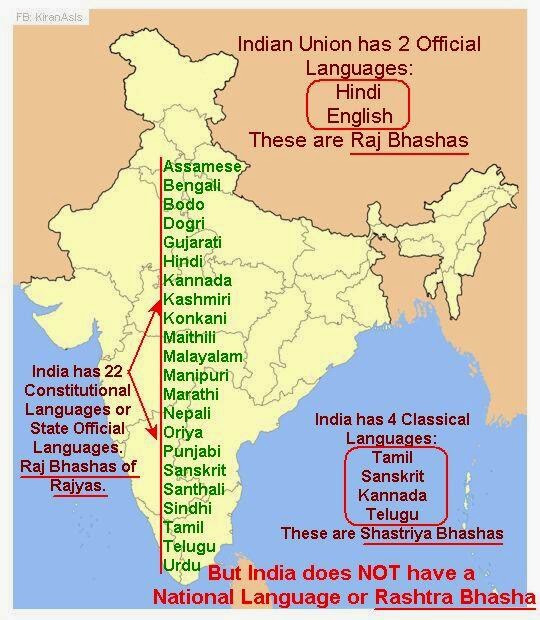
I am fed up of language barrier in India particularly, and in general globally. We humans have divided ourselves into very narrow pockets with linguistic identity. Mother tongue (matru bhasha), National language (rashtra bhasha), state languages (rajya bhasha), official languages (raj bhasha), classical languages (shastriya bhasha), link language, entertainment language, second language, third language, foreign language, invader language, heritage language... etc etc.

Here a chart that I had prepared the last time I got frustrated with language debate. Since then, 2 more classical languages may be coming up - Odia and Malayalam.


What I have learned after decades of seeing language debates and politics... Languages unite in some cases. But in more cases, languages divide us more than they unite. I don't have to give details of how languages have divided millions of Indians today.. how they have made 100s of millions of Indians see other 100s of millions of Indians as "un-Indian". The anger, the snubs, the protests, the beating, the reservations, the school politics, the ganging up, the insults.. it's just ugly in so many cases. In the height of "my language versus your language", many have stopped seeing others as a Bharatiya... or even a human deserving dignity.

The key problem is the unnecessary pride and chest beating.. If you don't learn "my language", you are not equal.. And the natural reaction is that if I abandon "my language" in government and business, it will be lost! And practically it is not possible for a regular person to learn more than 3 languages well - I mean read, write, speak and understand at high school level. With nearly 2 dozen really big languages being spoken by millions of people in each case, India is the land of language conflicts.

Frankly, I am not pro any language strongly.. I am not anti any language strongly. My take is that a language serves a purpose of communicating. Language(s) will help you get diverse information. Each have their own style and strength. They also have weaknesses. I am very proud of mine and you be proud of yours. Personally, I am all for more the merry policy! And that's pretty much it. If you start giving it too much importance and create your whole identity around a language (or opposing some other), it is not the best usage of your time. Languages evolve, borrow words, grow in vocabulary, shrink and die. It's a natural cycle. Some just undergo metamorphosis into one or more daughter languages in the course of time.

But nothing is constant. Kalaya tasmai namah. Everything that's born will die one day.
-------------------------------------------------------------------------------------------------------

And now the positive note:
What if.. we had a system in this 21st century, wherein  
You Speak Your Language, I Will Speak Mine - But We Shall Still Communicate!

Sounds crazy? Sounds impractical? It's not. Let me put in my vision and you tell me if this is possible. If possible, you are by all means free to use this idea and make money in the long  run :)

But I have some ideas.. I am sure you will have lot more. And none of these are not any genius stuff as many would already be in place in advanced pockets of our globe.

1) Let's start with a visit to a tax office, a bank or an insurance office. Take the tax office. You have to deal with a tax form as shown here. You are the "kardaata" or "tax payer" in Guwahati. What if you can't read either of the languages the form is printed in? There are 100s of millions of such Indians who can read and write, but not these two languages at an expertise level to fill in a critical piece of tax information.


No problem..
You take your mobile phone that has a handy scan app built into it, and just scan over that tax form. Or you can use a more elaborate professional handy scan machine.


Voila.. the form is fully scanned and you will see on your device an Asomiya translated version. Better, you will have the ability to key in the Cheque number, type of payment etc. right into the phone. When done, simply press a button to e-print the filled form right there. The office will have it right a the desk.
For those who can afford, it can be in their car. Almost all traffic inspectors in Bengaluru today print their traffic violation payment receipt right on the street using a blackberry phone which can print. 


The job is done. Those printing the challans have no language problem. They can print in one or two languages of their government or institution's interest. Those taking the service don't have to worry about learning the languages. They can fill in any language that they are familiar with. The important thing is for the job to get done well, easily and in an affordable manner.

2) Next - emergency instructions.

You are traveling from Guntur in AP to Mysuru in Karnataka. Almost all literate passengers in this inter state train would know Telugu or Kannada or both. But the night train has emergency instructions only in Hindi and English. Lakhs of people who travel interstate between these destinations would have difficulty reading and comprehending the vital emergency instructions.


Again.. use your phone, even the basic smart phone variety. Click the picture of the instructions. The app will then recognize the language(s) and give you an instant translation in Telugu or Kannada. Problem solved!

Some might say.. what's the big deal in reading these 3 lines? Trust me.. 100s of people died in train emergencies in India each year and even if 2 extra lives are saved crossing the language barrier, that's worth it.

It's not just train. It's for all emergency instructions. Plane, Volvo bus, LPG cylinder, inflammable fluid carriers, hazardous material handling factories, school premise, movie theater.. etc. etc.
When life saving instructions are not in the language you can read, they are NOT life saving! If we can make it truly language independent using sign languages, that's different. But at least here is some way to use the existing system, instead of changing it fully.

3) Moving on - Meeting a stranger for asking directions.

It has happened to almost all of us a few times in life. We ask for directions in a city or village that we are visiting, and invariably the language barrier comes in. In most cases, there's a genuine difficulty. But in some cases involving linguistic animosity, people are rude and won't help you. All of us will know at least 2 incidents in life, where we were shunted out just because we could not speak "their" language. In my view, it's risky to be language illiterate in India, particularly for women.

So here's a simple way out. You meet someone. Put a headphone bud into one ear.

Select the on source and destination language buttons on your phone. Boom... you can have a conversation. Your phone is acting as a real time translator. The other person also does the same. Even if the other person is not equipped with this app, your device will tell you what to tell after translation. Everything happens in real time! No interpreter needed. And adding a couple of simple Namaste, Thanks, Shukriya, Vanakkam will make the other person feel happy and your job will be done really well.

If you take the technology further and use Google Glass, you can do wonderful things without needing much human help. But Indian streets, particularly the non metro downtown areas, are a long way from actually using self-help Google glasses. So you need technology that can be simply used with existing human support that's available.


4) Then - Your PM speaks in Hindi.

Now this is a big issue in some pockets of south India and east India. PM Modi speaks in only in Hindi. Language pride and language hate politics kick in. Learn Hindi...  Don't impose Hindi groups start quarrel. If the PM were to speak in English too, the same things would kick in, but from some pockets in the North or West or center. The point is not language. It's the proficiency we have with it, and the like we have for it. Why not use mine is always the problem!

I can't solve the language problems when we have nearly 24 languages, each spoken by at least a few million people in India. It's next to impossible. For 60+ years people have tried. So what I would try is to let you keep your language and let me keep mine.

With just 20 seconds delay, all websites and TV or radio channels that broadcast PM's speech, can do a voice change-over into destination languages. The technology exists already in Europe which is yet another highly diverse India-like continent.


Europe and UN, with dozens and sometimes 100s of languages are involved, conduct business already without any barrier. We in India are still ages behind quibbling over mundane "you speak in my language" nonsense. In Indian parliament, if you have to ask a question in the 2000 year old INDIAN language Kannada, you will have to take prior permission. Unless you have prior permission, you have no choice but to switch to one of the 2 official languages, which at least 200 MPs from non Hindi regions of India are not proficient in! And they keep quiet and their constituencies suffer because of this language barrier. It's really silly and so non-federal in nature. And the same problem across all legislative assemblies where most Indian languages are shunted out even if there are people in the state speaking those languages.

So what can be done? Let the parliamentarians find their solution. We can focus on the general public watching TV. There are a variety of instant translation mechanism available with human help. All it takes is one person per TV station or one person per group of language channels/sites. Problem solved! No more subtitles issue. No more linguistic protests. It can even be two way in any TV debate. You ask in your language and an instant translation software or human intervention can take the debate to the destination language. You can literally participate in a Bangla debate at 5 PM, a Kannada debate at 7 PM and a  Hindi debate at 9 PM, if you are a channel hopping celebrity.. just kidding :)

If you want the original speaker's language, just select original voice through a remote button. In many cases, the emotion and dialogue delivery in the original language has no substitute in the translation. Additionally, another feature of play original and play translation for each sentence, where needed. This way you will learn some basics of the leader's language too. All these are possible with DVR technology and voice translation technology already. We just need to expand and make them affordable. 

5) Lastly.. you are on the road.

You are vacationing in Pune from Coimbatore but can't understand Marathi..
You are visiting Lucknow from Guwahati, but not proficient in Hindi subtitles.
You are touring Tirupati from Vadodara, and can't read temple displays in Telugu.

You can't read the local news papers.. nor can read street sign boards.. nor can make out the TV scroll. It is practically impossible in India to help all languages at all places.

So..  just point your mobile towards it.


App will get the info, understand the source language, translate it and show you the translation without changing the non-text part. Instantly!

You can use this in movies.. plays.. games.. street.. and even schools and colleges.
-------------------------------------------------------------------------------------------------


In summary:
  1. No more English panditya needed. Time to take the "elite" advantage away from those who have proficiency in English. They have a distinct advantage in Indian businesses today.
  2. No more fights on Hindi or no Hindi.. Time to take away the "elite" advantage central governments have created for those who speak Hindi, so that they alone can transact in government offices everywhere across India.
  3. No more Tamil pride, Marathi pride etc.. politics. Time to take away regional linguistic chauvinism (sometimes justified, sometimes not) where the anger is against one or two focused linguistic groups.
  4. No more hidden messages in one's language insulting the others. I am sure you all have seen in elevators, taxis, buses, trains, street corners..
  5. No more wasting or ink, paint and time in printing/announcing the same info multiple times. Isn't it irritating to hear the same announcements in 3 or 4 languages at some stations?
Make the world an equal opportunity place for all languages. I have only talked of some basic applications here. There are many advanced ways these can be taken to our education, industry, government, hospitals, temples and beyond. Imagine visiting Gaya and understanding instantly the meaning of those shraddha Sanskrit mantras when attending to the last rites of a dear one? The amount of usage is practically limitless.. all we need is proficiency in ONE Bharatiya language to live happily ever after (I consider English also as a Bharatiya language now).

The best part is that no major investment is needed. With smart phones already with more than 15% of Indians now, it is just a matter of time before 75% will have smart phones. I mean it's possible even before 2020 at the current rate!


So what are you waiting for? Go start a business or create apps to work on these ideas. Be a good Engineer. After all Engineers rule the world :) Be a good linguist to help the engineers. Be a great salesman and use the best finances to get it to all corners of India. Use the technology!

Everyone can understand, read, write and speak all languages. Wah.. now pinch me!!

Pictures used from: Wiki, bemoneyaware, blog.wisefaq, brighthub, pnrstatus.co.in, dailymail.co.uk, marketingmag.com.au, hearbudz, telecomcircle and techmaza.org. All credit to the original rights holders.